

Control Planes over Forges
Day 5 of 5

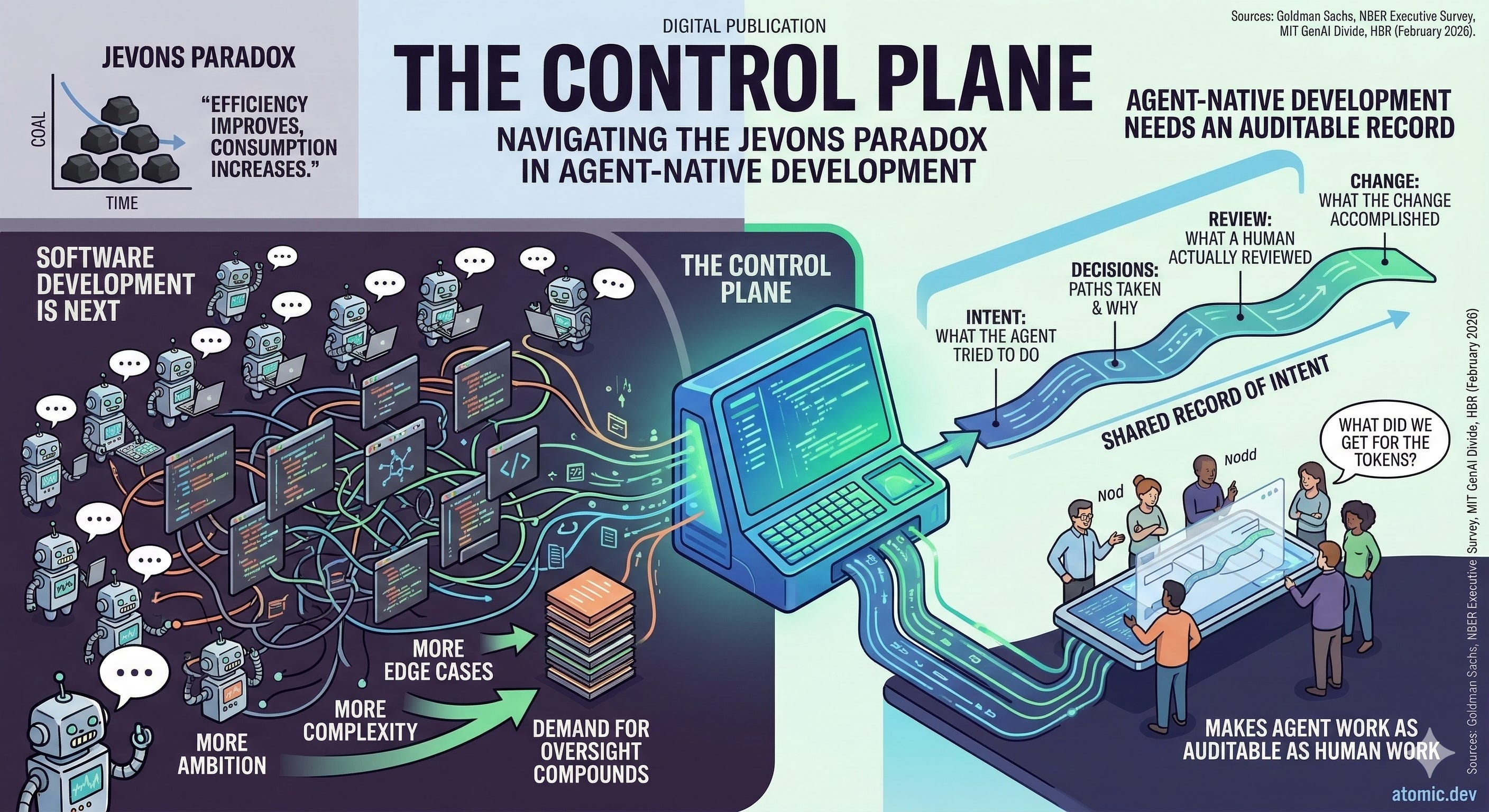
There is a principle from 19th century economics called the Jevons Paradox. When the efficiency of using a resource improves, total consumption of that resource goes up, not down. Jevons observed it in coal. The radiology field is living it now. AI-assisted reading didn’t reduce imaging orders, it increased them, because lower per-read cost made imaging viable for cases that previously couldn’t justify it.
Software development is next. As agents get cheaper and more capable, you don’t get the same amount of software built with fewer people. You get vastly more software attempted. More ambition. More complexity. More edge cases. More integrations. More surface area that requires human judgment to verify.
The demand for oversight doesn’t shrink as agents get cheaper. It compounds.
We already have a preview of what happens when agent infrastructure fails at scale. In December, AWS went down and took half the internet with it. Earlier this year, Anthropic had its own outage. If your engineering organization has 10 agents running 24/7 and the model provider goes dark, you don’t just lose productivity. You lose visibility into what was in flight, what got half-written, what was partially merged, and what needs to be rolled back.
That’s not a hypothetical risk. That’s a Tuesday.
This week we showed that the token costs are real, the rework is real, the budget has no home, and the industry has been exactly here before. The offshoring era resolved when the industry built Git, pull requests, and CI/CD. A shared record of what changed, when it changed, who approved it, and why. That record made distributed work auditable. It made accountability possible.
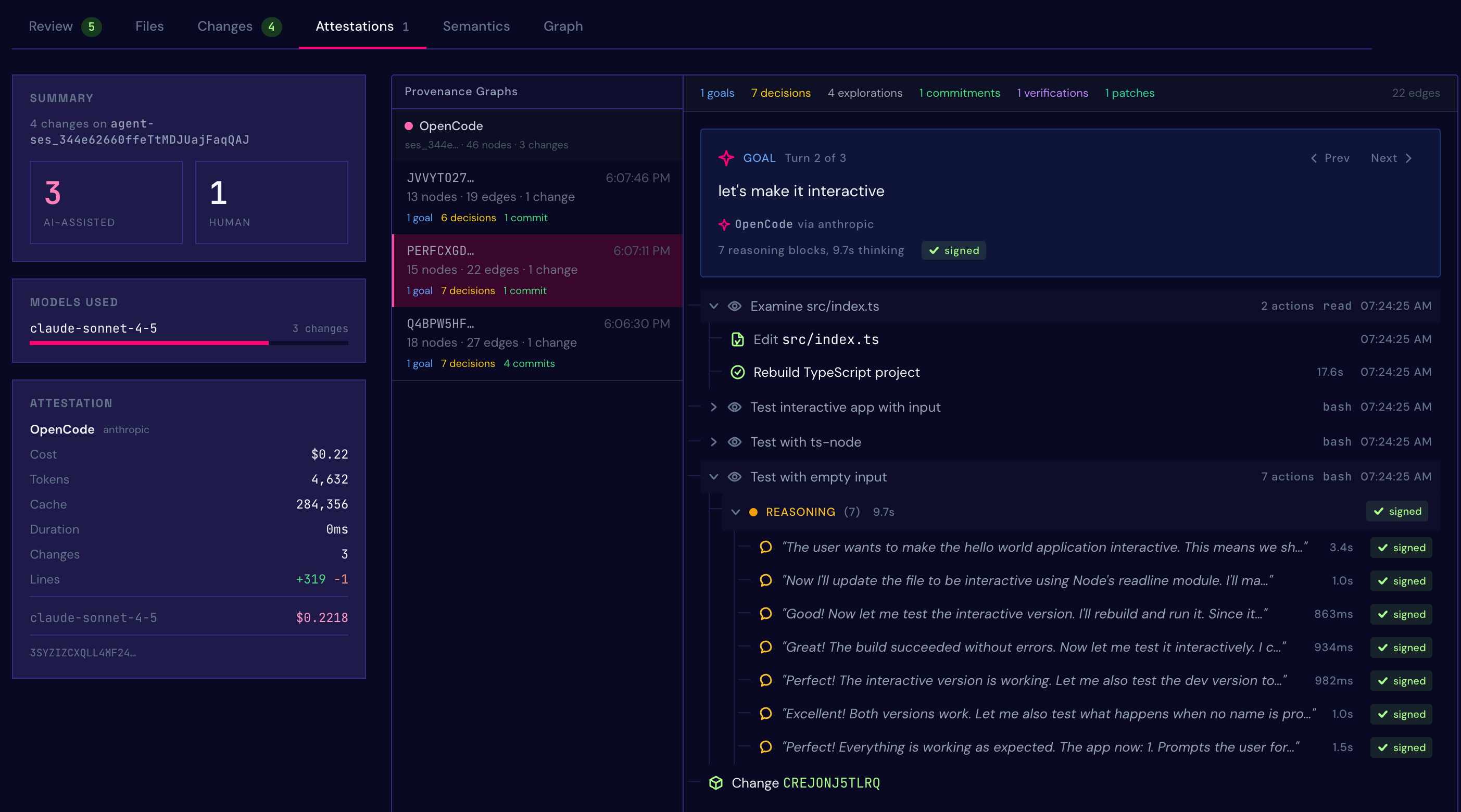
Agent-native development needs that same record. Not just logs and token counts. A record of intent: what the agent was trying to do, what decisions it made along the way, what a human actually reviewed, and what the change was meant to accomplish. At nine-figure spend, the audit always comes. That record is the difference between an engineering organization that can answer questions and one that can’t.
The question every engineering leader needs to answer isn’t whether they can afford the tokens.
It’s what they got for them.
That’s what we’re building at Atomic. A version control system designed for a world where most code is written by agents, one that captures intent, tracks decisions, and makes agent work as auditable as human work. The coordination infrastructure the industry needs to find its equilibrium in three years instead of fifteen.
The $250 billion already spent proved the models work. The next $250 billion needs a control plane.
Sources
Goldman Sachs Chief Economist Jan Hatzius, Atlantic Council, via Gizmodo (February 2026)
NBER Executive Survey (February 2026), via Fortune
MIT GenAI Divide: State of AI in Business 2025, via The Outpost
Ranganathan & Ye, “AI Doesn’t Reduce Work, It Intensifies It,” Harvard Business Review, February 2026
Be Atomic covers the infrastructure, primitives, and ideas behind agent-native software development, written by the team building it. atomic.dev